How to Sew a Duvet Cover (Easy Crib Size Sewing Tutorial)
If you’ve ever wondered how to sew a duvet cover, this easy step-by-step tutorial will show you exactly how to make one. Whether you’re creating a crib-size duvet cover for a baby shower gift or refreshing a comforter you already own, this sewing project is simpler than you might think.
Making your own duvet cover allows you to choose the perfect fabric, customize the size, and save money compared to store-bought bedding. With basic sewing skills and straight stitching, you can create a beautiful handmade duvet cover that’s both practical and personal.
Why You'll Love This Project?
- It's easy!
- Beginner-friendly.
- Time for The Project: 1-3 hours for an experienced sewer, or an afternoon if a beginner.
Why did I decide to try to sew a duvet?
My daughter asked me to make a pretty duvet cover for my granddaughter. For each of my older kids, I have made handmade baby shower gifts. And then I've tried to make a special blanket for each baby since. But, failed. They all started having babies around the same time, and it was hard to keep up after their first babies.
My daughter had a nice crib blanket left over, in a boy's color. Which wouldn't match her daughter Riley's room. That is when she asked me to make a baby crib duvet cover for it. This was a special first birthday gift. Are you looking for something else to sew? See all our topics on sewing and sewing for home.
Honestly, this tutorial could be used for other sizes, too. I have simplified things by not using buttons, no-zipper, no elastic, or ties. Full directions below to make it easy for you. If you have questions, email me. I'm happy to help. Try this placemat sewing tutorial next. It's the perfect beginning sewing project.
How to Sew a Duvet Cover
Please Note: This is not for newborn baby use!
Please use pediatric guidelines for when your baby can use a comforter/duvet covered comforter. 12 months and older is the recommended age. If gifting to a new parent, please write a note that it's not intended for newborn usage. (For more guidelines and baby safety information, research / look up SIDS)
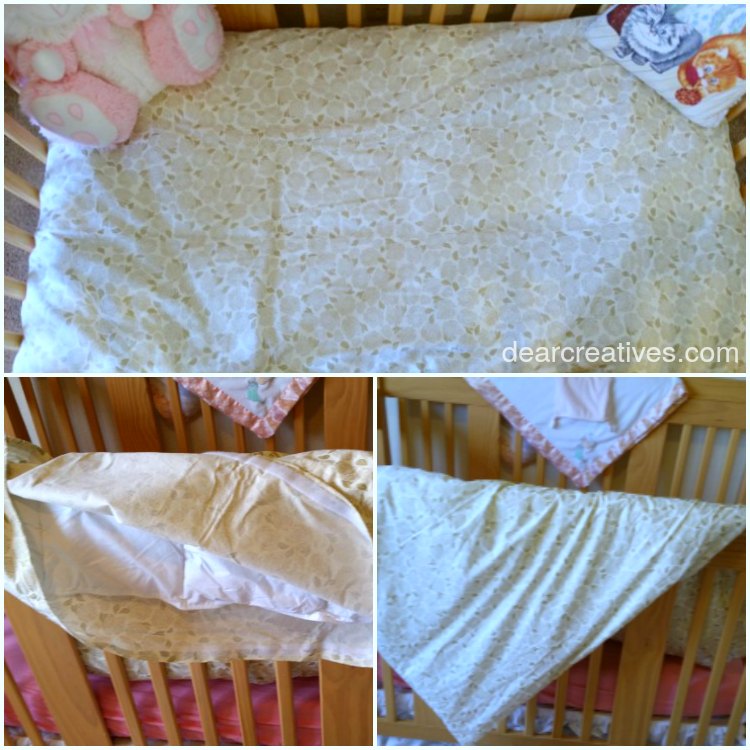
- I had my daughter send me cell photos once the comforter insert arrived after I visited.
- Why Velcro over buttons? Using iron-on Velcro for closing/opening the duvet cover to allow for taking the quilt or down comforter out for washing. Not only did this make it easy. There wasn't any worry about losing buttons and the kids finding them.
- Ways to save money on the project? If you are on a budget, you could price out using cotton sheets. Or pick out fabric on sale.
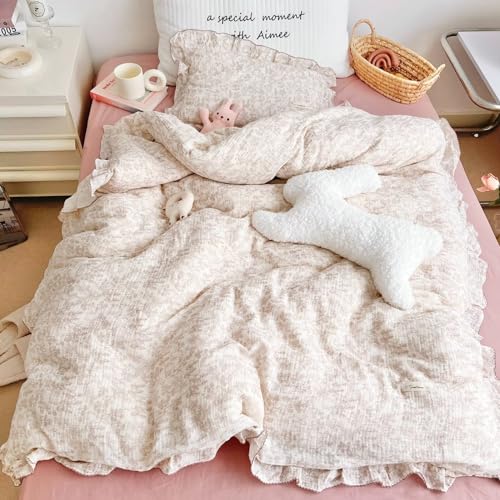
The fabric I picked was a pretty cream with a gold rose non-directional pattern. - What makes it an easy project? Only needing to finish the ends where the Velcro would be ironed on underneath for the top of the duvet cover.
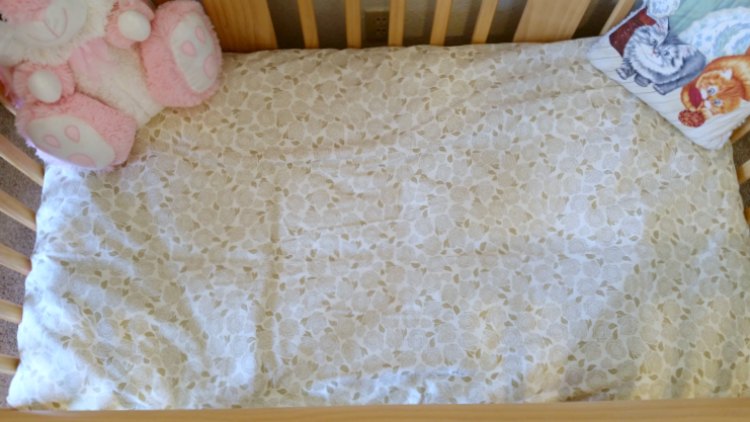
This makes this baby sewing project very easy. It would make a nice handmade baby shower gift for anyone. I decided to purchase this down comforter for inside the blanket. I wanted her to have something special from Grandma.
Let's get started!
How to sew a crib-size duvet cover
Materials Needed
- Fabric (size depending on comforter)
- Iron on Velcro or closure method
- Thread
- Pins
- Sewing machine
- Iron
Other helpful supplies for using iron-on velcro include a kitchen towel.
Cutting Fabric
- Fabric: Cut two pieces of fabric, preferably cotton or cotton flannel, slightly bigger than your down comforter or quilt. To allow for seam allowances by adding a bit extra (1/2inch) for each side.
I found this article helpful when researching sizing: crib size/what size is a crib size quilt for selecting your fabric dimensions [Common Quilt and Batting Sizes]. (alternately you could use two flat sheets if big enough to insert your comforter or blanket)
Project Notes
I ended up having the fabric store help me convert dimensions into yardage to allow for shrinkage. (sorry I forget yardage amount.) (Rough guide I purchased extra fabric to ensure enough after shrinkage, 36″ x 54″ x 2 pieces. I did end up cutting off some. See the referenced article above for more information to determine your size.
You will need to pre-wash and dry your fabric to allow for shrinkage before starting. Then press your fabric pieces. Then create your top finished edge. Here's how to do that.
How to Sew A Duvet Cover
Prewash and dry the fabric. Press it and make your top finished edge.
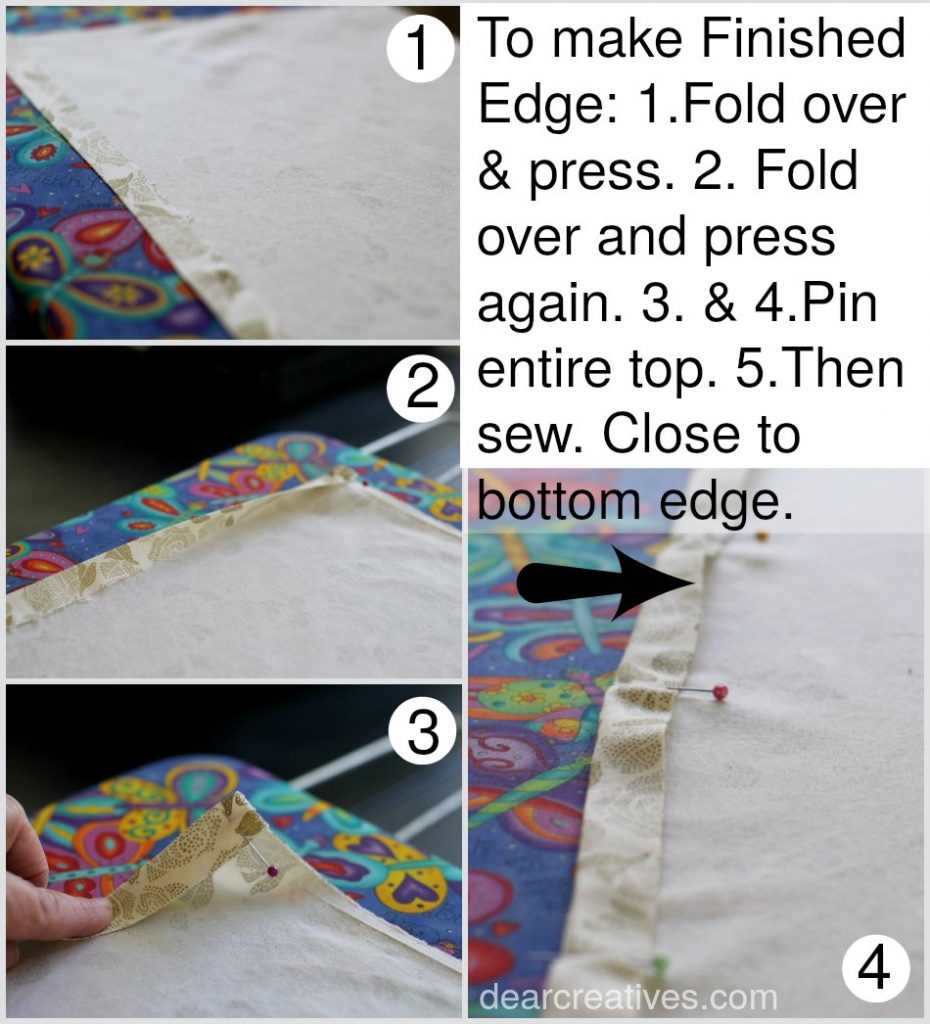
- Fold over and press the seam. And fold it a second time, folding over and pressing again.
- Pin the entire top.
Sewing the Edge
Next, you need to make the finished edge for the top of the duvet cover. Sew close to the bottom edge (furthest from the folded seam).
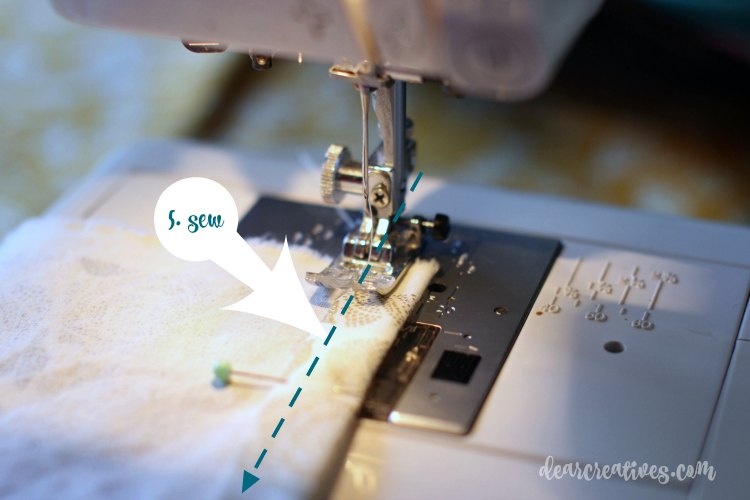
Taking out pins as you go, sew from one side to the other side. The above image shows you how to sew close to the edge, further away from the turned side.
When you're done, you'll follow the steps in the image below, starting at number 2.
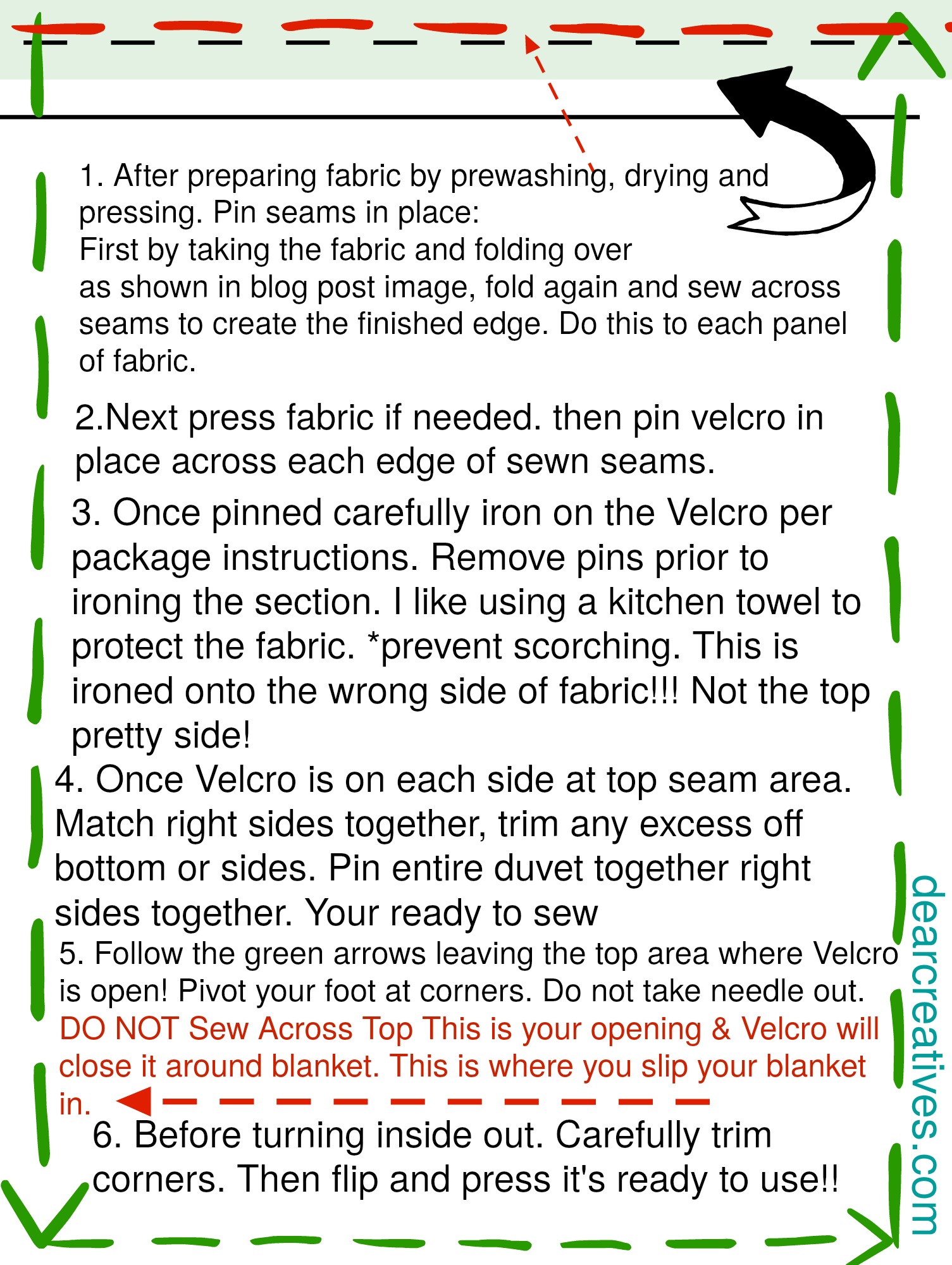
You can right-click and save this reference I made for your personal use only. Direct others to this post or pin from this post to save. Below is how to apply a Velcro closure. Further down, I have researched some sewing videos to help you if you're a novice sewer.
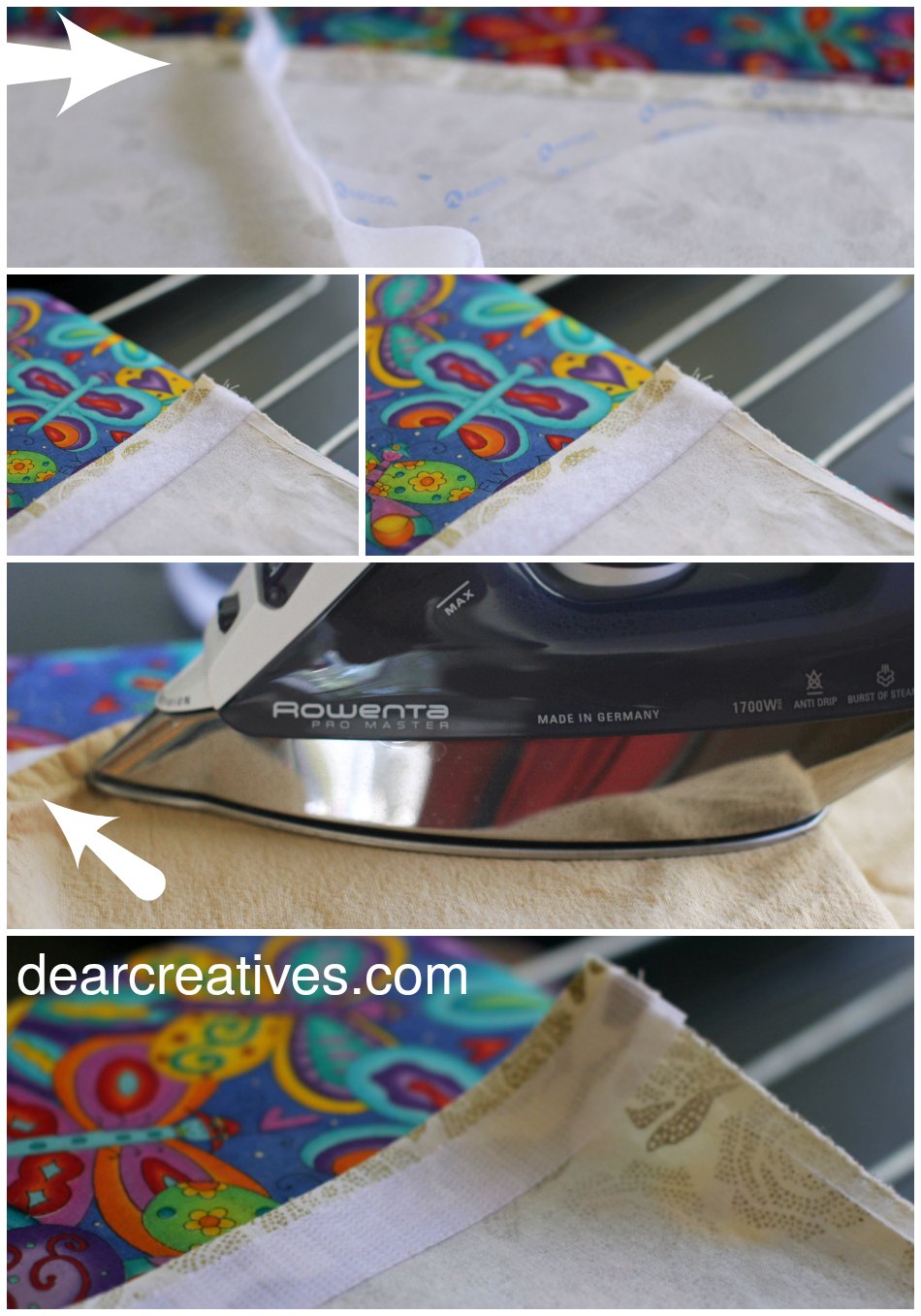
Applying the closure
Now you'll want to take your roll of Velcro and measure it to match across the top of the duvet's finished seam you just made.
Cut and separate the Velcro from the tape cover. Next, carefully place onto the seam, leaving slightly lower than your top edge. As shown in the image above. (on the wrong side of the fabric)
- Place a thin kitchen towel down and follow the iron-on Velcro directions for adhering.
- After both sides have the Velcro attached, you are ready to pin right (pretty sides) together!
Sewing The Duvet Cover
- Put the right sides together (with the attached Velcro at the top for each side).
- Sew around the three edges, leaving the Velcro side unsewn.
Follow the green sewing lines in the directions image. Use a stop and start (forward and backward) when beginning to sew. Leaving the Velcro/top of the blanket not sewn. Except starting at the top edge to go down and all the way around to finish at the other top edge. - Trim any excess carefully before turning the duvet inside out. Trim at the sides, bottoms, and corners on the diagonal.
- Now, you are done! Flip to the right side.
- Insert your down crib comforter.
- Velcro shut.
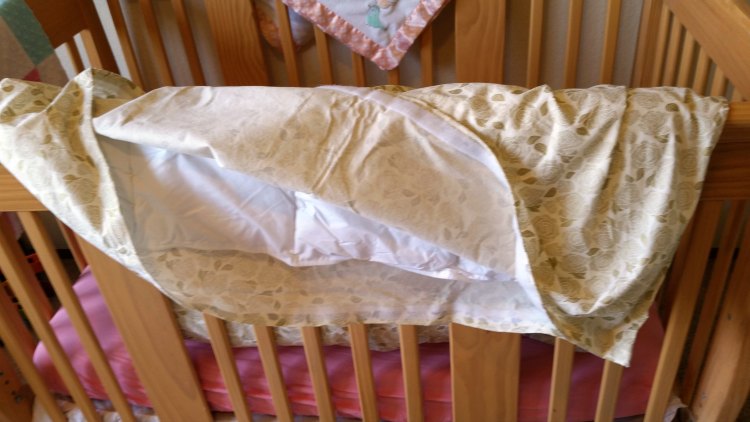
Here is what it looks like inside before closing up the Velcro edge with the comforter inside.
This same method can be adjusted to sew a twin, full, or queen-size duvet cover by simply changing the measurements.
This is the down alternative comforter I purchased! I highly recommend it.
- 100% Organic Cotton
- Imported
- Luxury Down Alternative fine fiber covered by Fine Organic Cotton Covering.
- 100% Organic cotton covering for comfort and all-season use
- Box stitched for stability, piped edges. Easy Care- Machine washable. Quick drying.
- 100% hypo-allergenic. Mite resistant and yet feels like Goose Down
- Light, good for baby bedding
- size: Crib Size
Helpful articles and videos from around the web for this project if you're a beginner to sewing projects like this:
- I found this article helpful when researching crib size/ what size is a crib size quilt for selecting your fabric dimensions.
- In Martha Stewart's video she shares a fancier duvet cover. The video shows the correct way for trimming and clipping corners. She uses French seams in hers and attaches a flannel insert and ties.
- Want to get a little fancier look? This striped baby crib duvet tutorial looks pretty and simple, too.
- Twin Size Duvet Cover video, this one is a bit more detailed, has clear, helpful directions if you're interested in making something for a bigger child.
- How to Make a Duvet Cover
Video: How To Make a Toddler Duvet
Replace buttons with Velcro easily.
FAQ: Sewing a Duvet Cover
- What fabric is best for a duvet cover?
Cotton or cotton flannel works well — they are soft, easy to sew, and washable. - Can I use this method for other sizes?
Yes! Simply adjust the cutting dimensions to match your comforter or quilt size. [Common Quilt and Batting Sizes] - How do I finish seams?
Press seams flat and topstitch to reinforce, or use zigzag/serger on raw edges.
How To Make a Crib-Size Duvet Cover
Pin it for later!
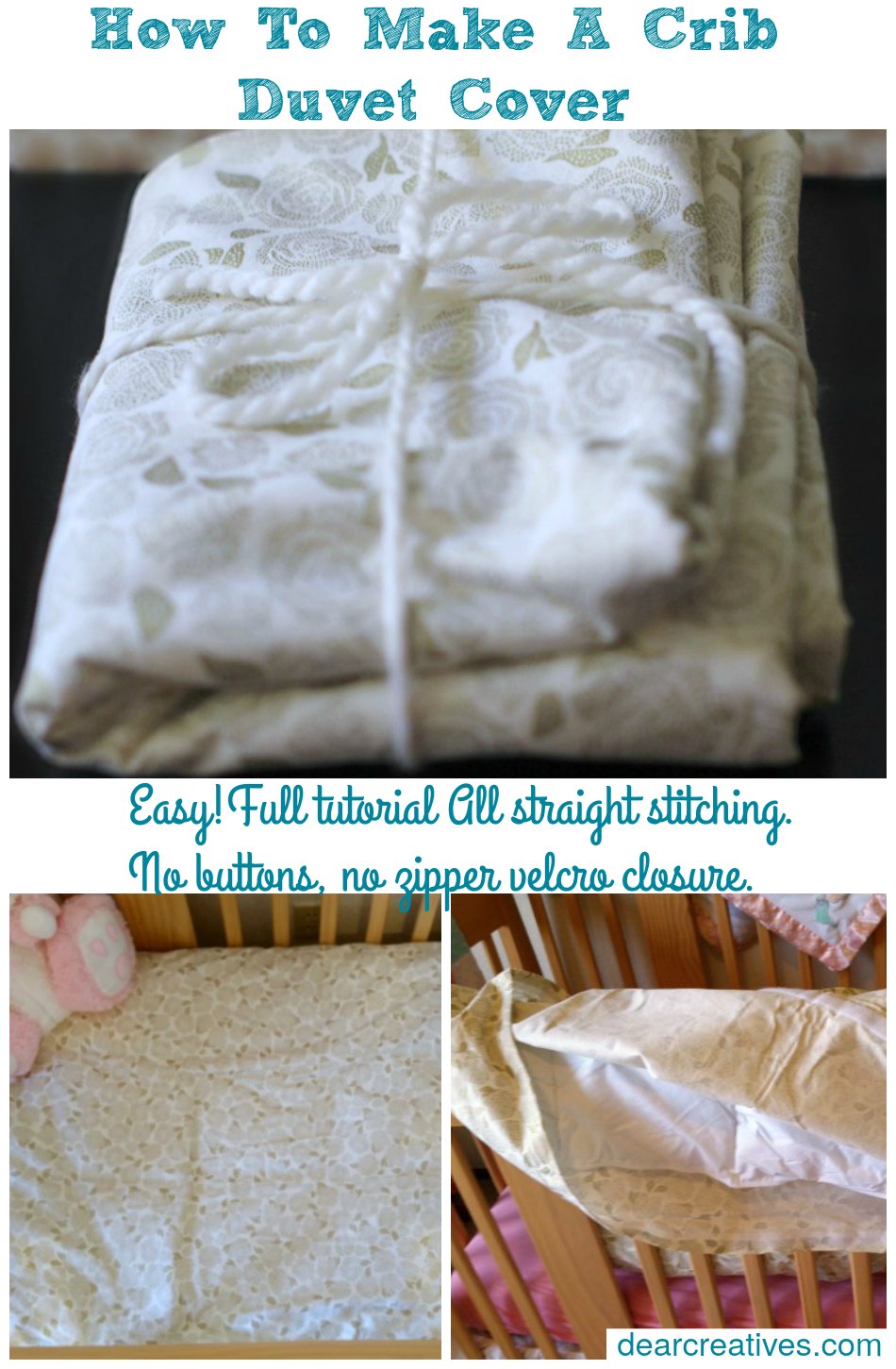
Enjoy gifting or seeing your lovely toddler use!!
- New here? Be sure to Subscribe.
- Pin it for Later
- Follow us on Pinterest
- Shop our favorites on Amazon
Sewing for Baby
- Receiving Blankets, Booties and Bootie Insert Tutorial *
- Baby Booties Tutorial *
- Easy Sewing Patterns for Handmade Baby Gifts
- Burbing Cloths For Baby *
- How To Sew A Banner / Bunting
Sewing For Home
How long have you been sewing?